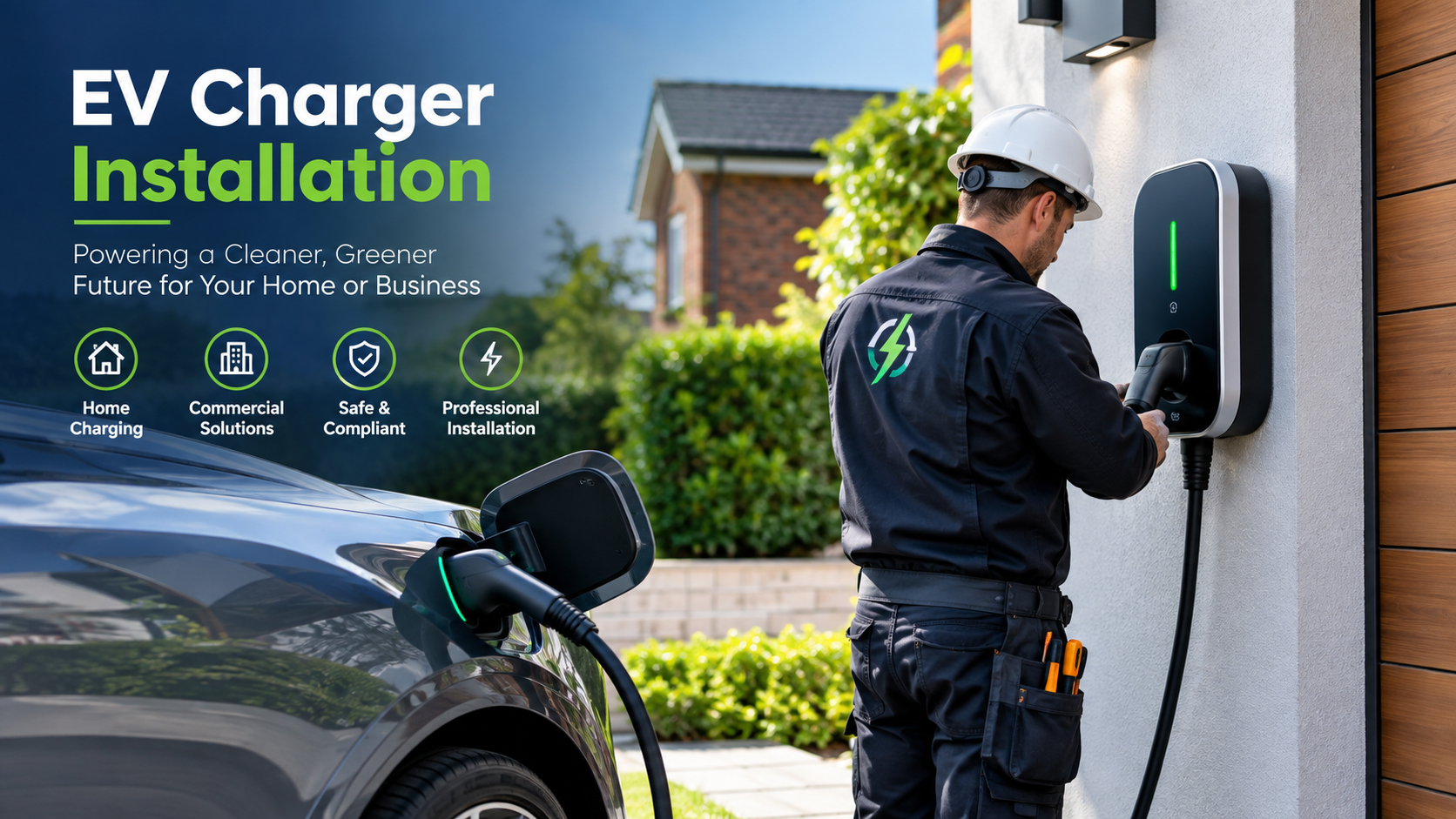
Electric vehicles (EVs) have moved from a niche choice to an increasingly common option for drivers across the UK. As more homeowners, businesses, landlords, and fleet operators switch to electric vehicles, demand for convenient and reliable charging infrastructure continues to grow.
Coventry has already established itself as a major location for electric vehicle infrastructure. The city has more than 2,000 public charge points, and Coventry City Council continues to expand its charging network through residential charging hubs, rapid chargers, and other projects. In March 2026, the council also announced a £1.5 million programme for new electric vehicle charge point installations during 2026/27.
For property owners, these developments highlight an important opportunity. Installing an EV charger can improve convenience for residents, employees, customers, and visitors while preparing a property for the continued growth of electric vehicles.
Why Is EV Charging Growing in 2026?
Several factors continue to drive the demand for EV charging installations. More drivers now consider charging access when choosing a vehicle, home, workplace, or commercial destination. Property owners therefore have a growing reason to consider charging infrastructure as part of their electrical and property management plans.
Coventry’s current electric vehicle strategy anticipates a significant increase in EV and hybrid vehicle adoption over the coming years. The city's strategy also includes residential charging hubs and new charging technologies designed to support changing demand.
This growth means charging infrastructure no longer represents a luxury feature. For many properties, it represents a practical investment that supports modern transport requirements.
Home EV Charging for Coventry Residents
Home charging provides one of the simplest ways for EV owners to maintain their vehicle. Instead of depending entirely on public charging stations, homeowners can charge their vehicles while they sleep or while the car remains parked during the day.
A professionally installed home charger can provide faster and more convenient charging than a standard domestic socket. Property owners can also choose charging equipment according to their vehicle, parking arrangements, electricity supply, and expected daily usage.
For households considering EV car charging in Radford, professional installation can provide a convenient long-term charging solution without requiring regular trips to public charging locations.
EV Charging for Landlords and Residential Properties
Landlords can also benefit from installing EV chargers at rental properties. As EV ownership increases, tenants may increasingly look for properties that provide convenient charging facilities.
A dedicated charger can add another useful feature to a rental property, particularly where the property includes private parking or allocated parking spaces. Landlords can also use charging infrastructure to demonstrate that they actively respond to changing tenant expectations.
Property owners should always consider the electrical capacity of the building before installing charging equipment. A qualified electrician can assess the existing supply, determine suitable charger specifications, and recommend any necessary electrical upgrades.
Commercial EV Charging Installations
Businesses across Coventry can use EV charging installations to support employees, customers, visitors, and company vehicles. Offices, retail premises, warehouses, hotels, restaurants, and other commercial properties can all benefit from suitable charging infrastructure.
Businesses with company fleets can also use dedicated charging facilities to support the transition towards electric vans and cars. Coventry City Council continues to encourage local businesses to adopt electric vehicles as part of its wider transport and sustainability plans.
Commercial charging also gives businesses another opportunity to improve customer experience. Customers who drive electric vehicles may appreciate the ability to charge while they shop, work, attend appointments, or use other services.
Choosing the Right EV Charger
Property owners should not select an EV charger based solely on charging speed. Several factors can influence the most suitable installation, including:
- Vehicle compatibility
- Available electrical capacity
- Parking location
- Charging requirements
- Property type
- Expected daily usage
- Future charging demand
- Smart charging capabilities
A professional electrician can assess these factors before recommending suitable equipment.
For example, a homeowner who drives a relatively short distance each day may have very different charging requirements from a business that operates an electric vehicle fleet.
Smart Charging Technology
Smart charging has become an important part of modern EV infrastructure. Smart chargers can give users greater control over when and how their vehicles charge.
Depending on the equipment, users may monitor charging through an app, schedule charging sessions, and take advantage of lower electricity prices during suitable periods.
Smart charging can also help property owners manage electricity demand more efficiently. As more electrical technologies become part of homes and businesses, intelligent energy management can become increasingly valuable.
Supporting Coventry's Sustainable Transport Goals
EV charging installations form part of Coventry's wider transition towards cleaner transport. The council has outlined plans to expand charging infrastructure, develop residential charging hubs, and introduce innovative charging methods. Its 2026/27 programme includes further investment in new public chargepoints.
Coventry's strategy also explores technologies such as pavement charging solutions and other innovative approaches that can help residents without private driveways access convenient charging.
These developments demonstrate how charging infrastructure continues to evolve beyond traditional public charging stations.
Why Professional Installation Matters
Installing an EV charger involves more than mounting a unit on a wall and connecting a cable. The electrical system must support the charger safely, and the installation should meet applicable electrical requirements.
A qualified electrician can assess the property, inspect the existing electrical installation, select suitable equipment, install the charger correctly, and test the completed system.
Professional installation also helps property owners identify potential electrical issues before they affect the charging system. This approach supports safe operation and gives homeowners and businesses greater confidence in their investment.
EV Charging and Property Value
As EV ownership continues to grow, charging facilities may become an increasingly attractive property feature. Homebuyers and tenants who own electric vehicles may prefer properties that offer convenient charging access.
Commercial property owners can also use charging facilities to improve the appeal of their premises. Providing charging access can support employee benefits, customer services, and company sustainability objectives.
While an EV charger should not represent the only reason to invest in a property, it can provide a practical feature that supports changing consumer expectations.
Preparing for Future EV Demand
The demand for charging infrastructure will continue to change as electric vehicle adoption increases. Coventry's long-term charging strategy anticipates significant growth in electric and hybrid vehicles and plans infrastructure around future demand.
Property owners who install suitable charging infrastructure now can prepare their homes and businesses for this transition. However, they should consider future requirements when selecting equipment and planning electrical capacity.
Scalable and smart charging systems can provide greater flexibility as vehicle technology and charging requirements develop.
Final Thoughts
The growth of EV ownership makes charging infrastructure an increasingly important consideration for Coventry property owners in 2026. Homeowners can enjoy convenient overnight charging, landlords can improve rental properties, and businesses can support employees, customers, and electric vehicle fleets.
The continued expansion of Coventry's charging network, including new residential hubs and planned 2026/27 installations, demonstrates the city's ongoing investment in electric vehicle infrastructure.
For property owners considering professional EV car charging installations in Radford or Coventry, choosing the right equipment and working with qualified electricians can create a safe, practical, and future-ready charging solution.
MF Electrical can help property owners assess their electrical requirements and plan suitable EV charging installations for residential and commercial properties. Investing in professional charging infrastructure today can help properties keep pace with the changing needs of tomorrow's electric vehicle drivers.